
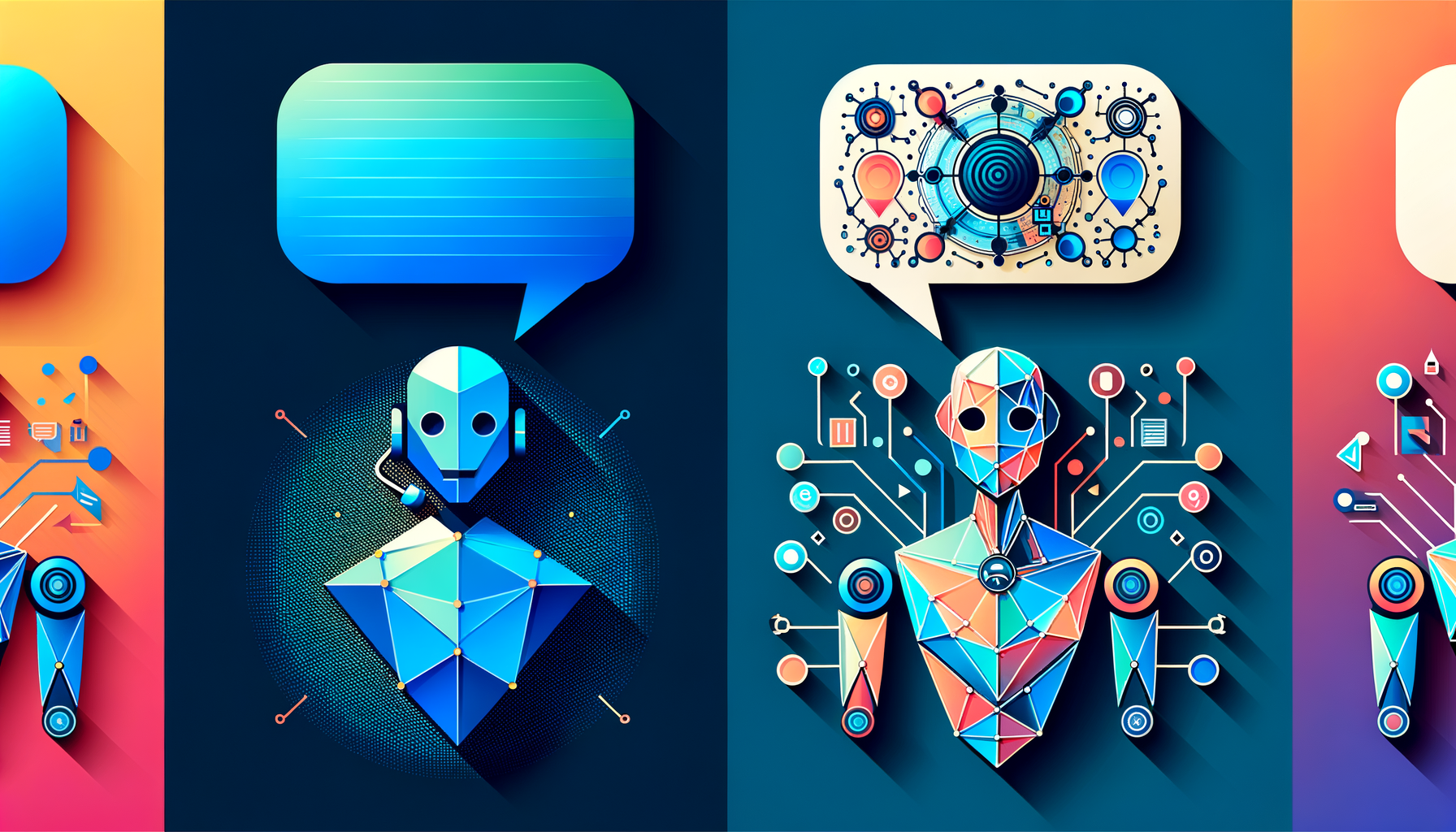
The AI market has a language problem.
Chatbot. AI assistant. Copilot. Agent. AI employee. Everyone uses these words differently. Most companies use them interchangeably in their marketing — which makes it nearly impossible for you to know what you're actually buying.
So let's cut through it.
What's a Chatbot?
A chatbot is a program that responds to text input. That's it.
The simplest chatbots follow a script. "Type 1 for Sales, 2 for Support." You've used these. You've hated these.
Modern chatbots powered by large language models (like ChatGPT) are dramatically better — they understand natural language, can reason, and generate genuinely useful responses. But at their core, they're still reactive. You ask, they answer. You close the tab, they stop.
- Responds when prompted
- Lives in a browser tab or widget
- No persistent memory (or very limited)
- Can't take action in external systems
- Stops working when you stop watching
A chatbot is a tool you use. You go to it.
What's an AI Employee?
An AI employee is fundamentally different. It's not a tool you use — it's a worker you deploy.
- Has persistent memory. It knows your business, your products, your preferences. It remembers what you discussed last week and builds on it.
- Connects to your systems. CRM, inventory, accounting, e-commerce — it logs in, pulls data, and takes action. No copy-pasting.
- Works asynchronously. Give it a task that takes 30 minutes. Walk away. It finishes and messages you when it's done.
- Reaches you where you are. Text it on Telegram, WhatsApp, or iMessage. It comes to you — you don't go to it.
- Operates 24/7. It doesn't take breaks, forget its training, or call in sick.
An AI employee is a worker you manage. It comes to you.
The Comparison That Matters
| Chatbot | AI Employee | |
|---|---|---|
| You go to it | ✅ Browser tab | ❌ It comes to you |
| Memory | Resets each session | Permanent, cumulative |
| Takes action | Only generates text | Connects to systems, pulls data, sends files |
| Works offline | Stops when you close | Runs tasks asynchronously |
| Communication | Website widget | Telegram, WhatsApp, iMessage |
| Learning | Starts fresh every time | Gets smarter every week |
| Cost equivalent | A search engine with personality | A part-time employee who never sleeps |
Why This Matters For Your Business
If you're evaluating AI tools for your company, the chatbot vs. AI employee distinction isn't academic — it determines what you can actually accomplish.
- Get answers to questions (if you ask the right way)
- Draft content (if you provide enough context each time)
- Brainstorm ideas (if you remember to use it)
- Automate weekly reports that arrive in your inbox every Monday
- Ask "what were our top 10 products last quarter?" and get a spreadsheet back
- Delegate research tasks and get finished summaries hours later
- Have a team member who knows your entire business and never needs re-training
One is a tool. The other is leverage.
The Cost Tells the Story
A chatbot subscription (ChatGPT Pro, Claude) runs $20-200/month. That's fair — for a tool you use when you remember to open it.
But consider what you're actually spending to get work done:
- Part-time VA: $3,000/month (works 9-5, takes vacation, makes mistakes)
- Freelance data analyst: $1,500/month for 10 hours
- ChatGPT + Zapier + custom scripts: $400+/month plus developer time
An AI employee through MySonny costs $290/month. All-in-one. 24/7. No code. And it gets smarter the more it works with you.
That's not a software subscription. That's the most cost-effective hire you'll ever make.
How to Get Started
If you've been using chatbots and feeling like something's missing — that "something" is action. Memory. Autonomy. The ability to actually work instead of just talk about working.
MySonny lets you build and deploy AI employees in under 5 minutes:
- Sign up — 14-day free trial, no credit card required
- Choose a role — Customer Support, Sales, Operations, Marketing, Admin
- Deploy — Text it on Telegram. It goes to work.
No coding. No technical background. Just tell it what you need, like you'd tell a new hire.
The era of chatbots was the warm-up. The era of AI employees is here.